Former Puerto Rico Public Security Chief Has Exclusive Flock Distribution Contract, Court Records Say
The situation is FLOCKed up!

Over the last two years, Flock Safety has been getting a lot of attention for their numerous scandals, like cops doing license plate lookups to stalk people, helping ICE find immigrants, and a bunch of other things. In Puerto Rico, the attention they’ve received is fairly recent and there has not been a lot of news on Flock or other surveillance systems. This has started to change, particularly since friend-of-the-newsletter Diego Alcalá started publishing about surveillance on his Substack (go subscribe right now!).
A few days ago, I went on a guided tour of the surveillance systems in the city center of Bayamón led by Alcalá and made a low-effort short-form video about them, which has received a lot of attention and a bunch of people fighting in the comments.
Clearly, people want to know more about these surveillance systems throughout the archipelago, even if they’re using “Flock” as a catch-all for all surveillance or automated license plate reader (ALPR) cameras. So, I’m here to provide what this newsletter does best: publish never-before-seen documents about a niche national security-adjacent topic. That's the Heavy Weather guarantee.
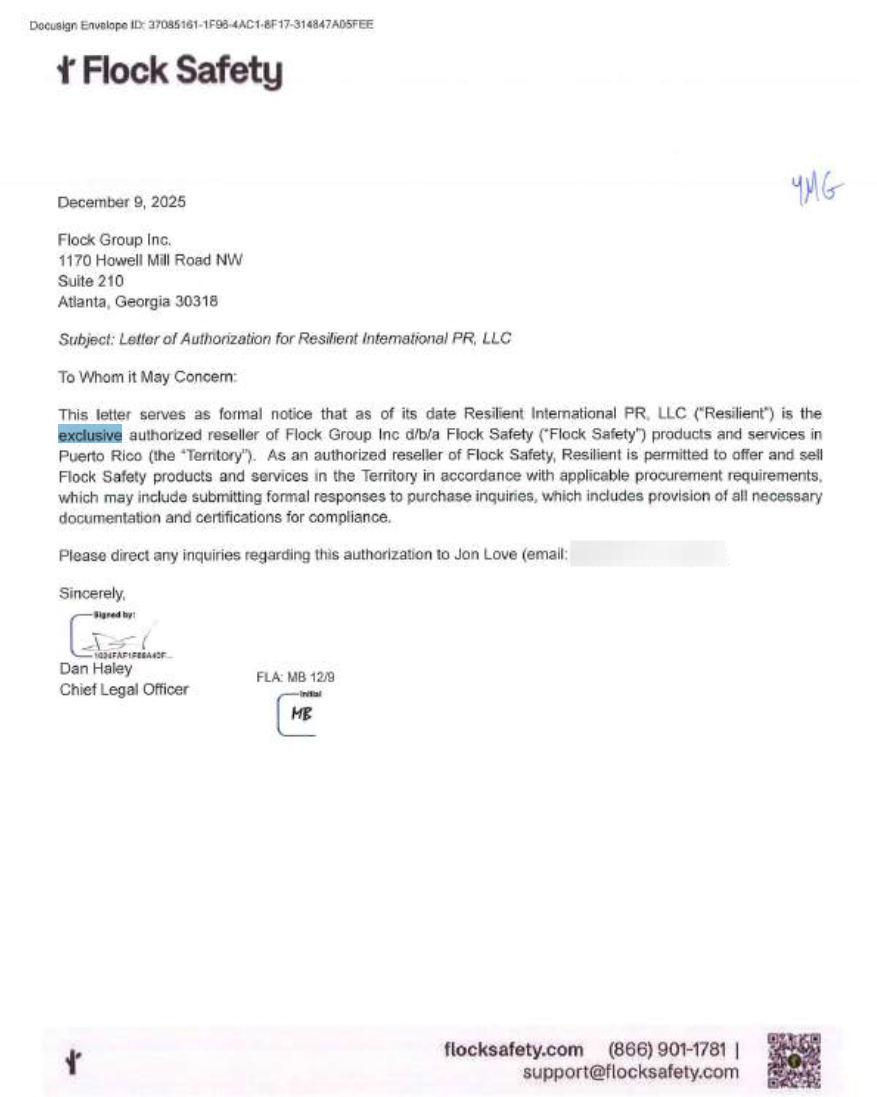
Resilient International, a company founded by the former Puerto Rico Secretary of Public Safety, Alexis Torres Ríos, is the "exclusive authorized reseller" of Flock in Puerto Rico, according to court records reviewed by Heavy Weather. This allows them to offer and sell the company's surveillance systems throughout the archipelago.
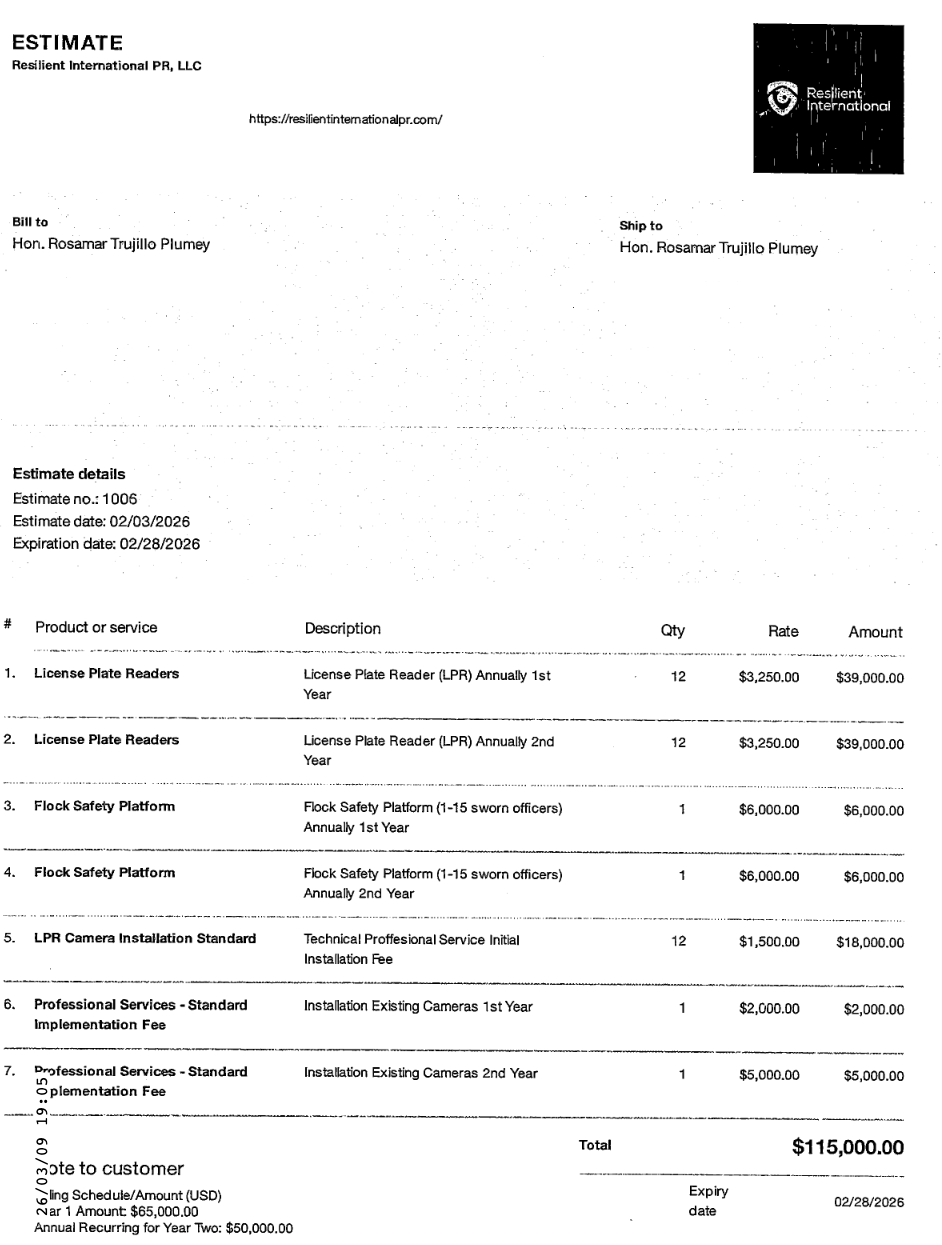
Resilient International is contracted by at least two municipalities to install Flock cameras. The company has a March 2026 contract with the Municipality of Santa Isabel to install 12 Flock cameras and train at least one officer on Flock's platform. The contract does not have the location of the cameras.
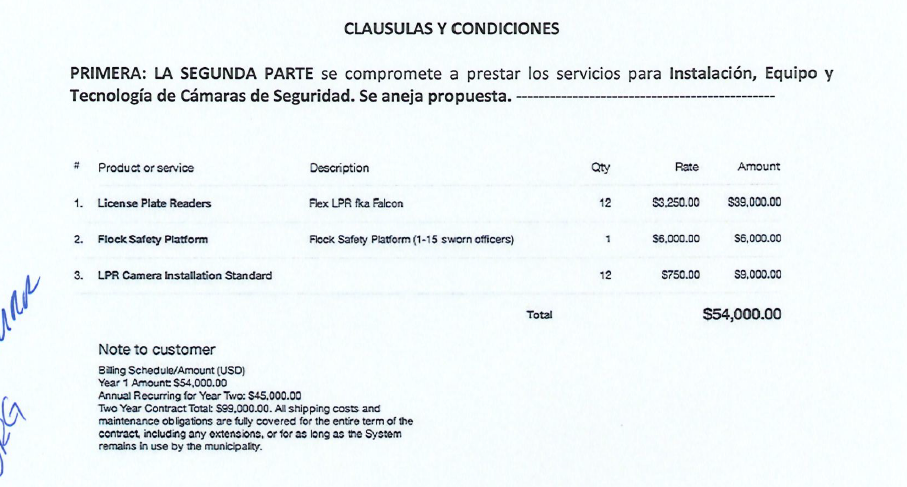
The company's other contract is with the Municipality of Humacao, seemingly for 12 Flock cameras.
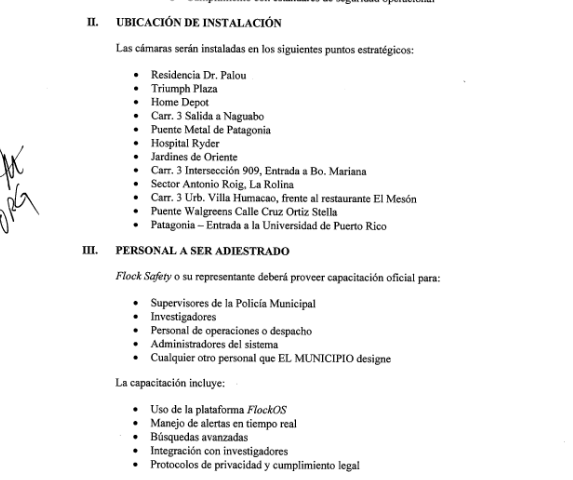
Here are the locations for the Flock cameras in Humacao and what personnel were meant to be trained on the system:
There are also Flock cameras at Home Depots throughout the archipelago. The company has a contract with Flock for surveillance services.
However, the more interesting details about Resilient International and Flock emerge from a municipality where they missed out on getting awarded a contract.
Late last year, the municipality of San Lorenzo put out a request for proposals to install 26 solar-powered license plate reader (LPR) cameras. Three companies submitted proposals, but the municipal government chose Axon, which also sells surveillance systems and manufactures the body-worn cameras used by the Police of Puerto Rico. However, Génesis Security Services, one of the other two companies that submitted a proposal seemingly took issue with that and sued the municipality, arguing that they should have been awarded the contract.
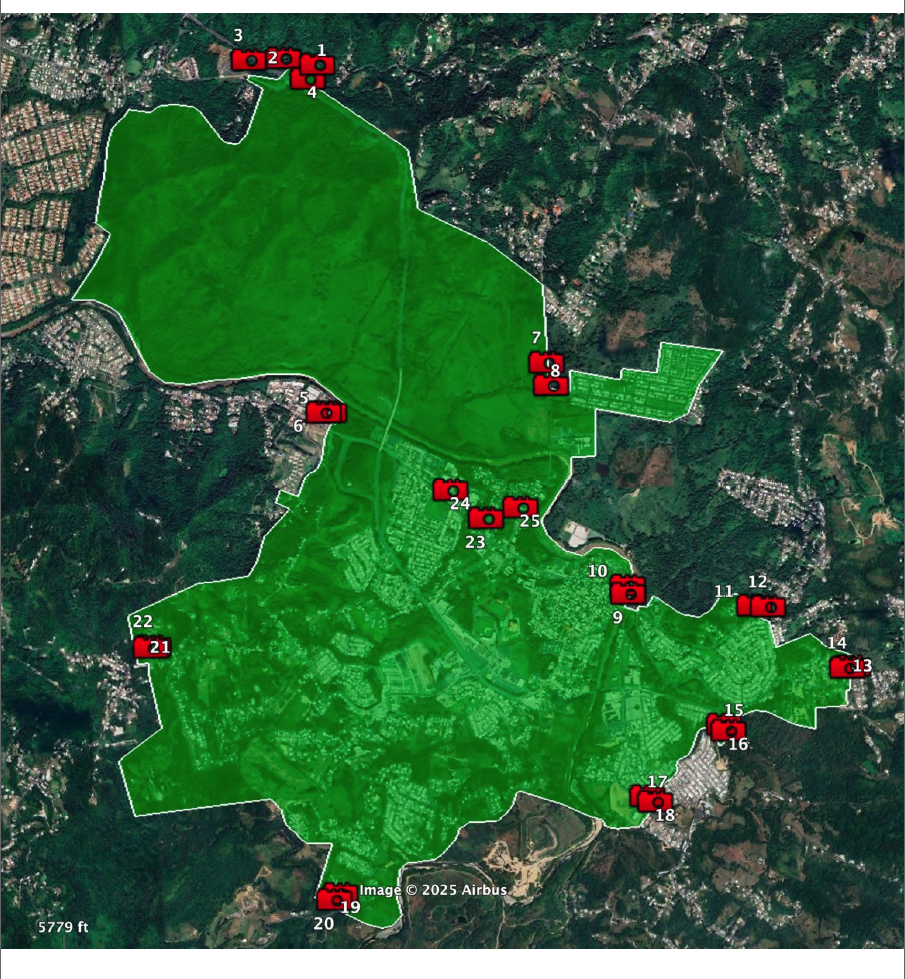
Although the Court of Appeals eventually affirmed the San Lorenzo Auction Board's decision to go with Axon's ALPR cameras, the documents produced by the lawsuit — including the email showing Resilient International has an exclusive contract with Flock — are incredibly illuminating about how the controversial surveillance company’s systems are marketed in Puerto Rico, as well as Génesis Security's surveillance technology.
Per one of the documents, Génesis Security and Resilient International submitted a joint proposal to San Lorenzo to install Flock cameras throughout the municipality. The “strategic alliance” would have given the municipality several benefits, including operational continuity during emergencies, budget optimization, and developing initiatives like monitoring centers, among others.
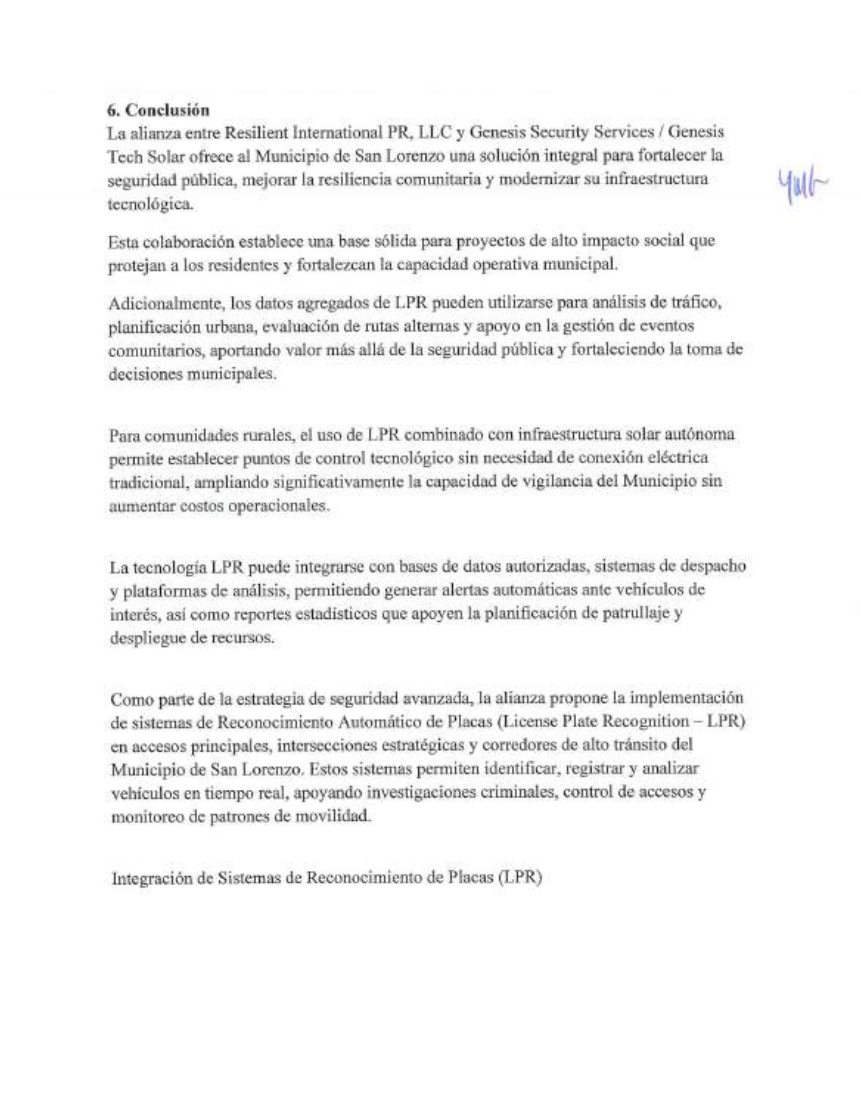
The documents show that Génesis Security and Resilient International proposed a system that includes LPR cameras, livestreaming, a real time monitoring platform, the complete vehicular movement history and analysis, as well as automatic alerts for marked vehicles. The document states that the monitoring platform is able to identify vehicles by their location, license plate, transit direction, and “advanced criteria” that facilitate real time investigations and retrospective analysis.
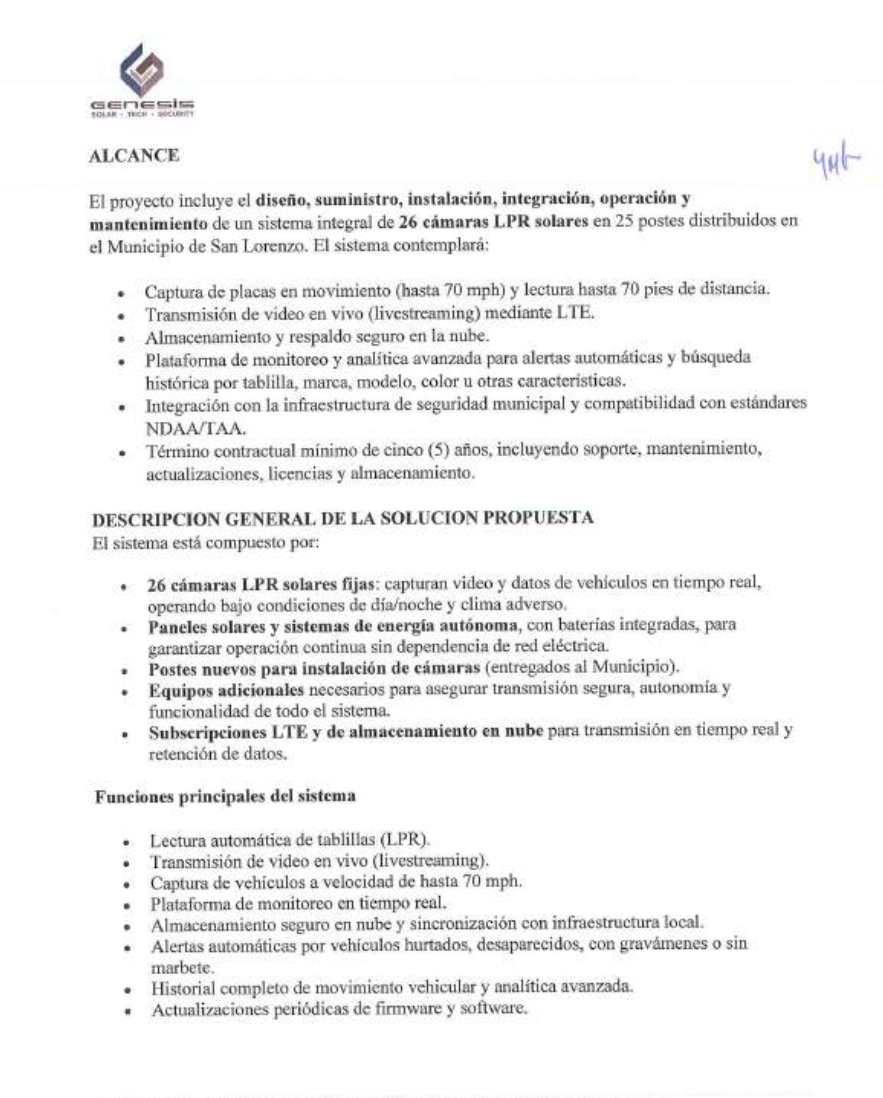
“For rural communities, the use of LPR combined with solar autonomous solar infrastructure enables the establishment of technological checkpoints without the need for a traditional electrical connection, significantly expanding the municipality's surveillance capacity without increasing operational costs,” reads the proposal from Génesis Security and Resilient International found in the court records.
To be clear, while Flock cameras have been abused by police and other law enforcement agencies throughout the United States in a myriad of ways. There is no evidence this has happened in Puerto Rico. Whether this is because it has not happened or because it hasn't been unearthed yet remains to be seen.
Génesis Security is an incredibly prevalent private security company throughout Puerto Rico. Per the Comptroller’s website, the company has contracts with several state agencies and municipalities for private security guards and surveillance systems. However, according to public reports, its contracts with state agencies, like the Education and Health Departments, has led to the company downsizing.
Meanwhile, Resilient International is a fairly small company by the look of things. Torres’s biography found in the court documents, says that the company has an “ongoing relationship” with the archipelago’s news outlets, which secures them “weekly media access.” However, as far as I could find, there is not much coverage at all of the company by major media outlets in Puerto Rico. Torres Ríos is also the former sub-secretary of Homeland Security Investigations (HSI), a subdivision of ICE, in Puerto Rico, per local paper El Sol.
The day before this article was set to be released, Alcalá and Torres Ríos appeared on the panel show Jugando Pelota Dura. Torres Ríos argued the cameras made Puerto Rico safer, but didn't acknowledge that he was the president of Resilient until Alcalá called him out on it. Torres additionally said that he would never share the locations of Flock cameras.
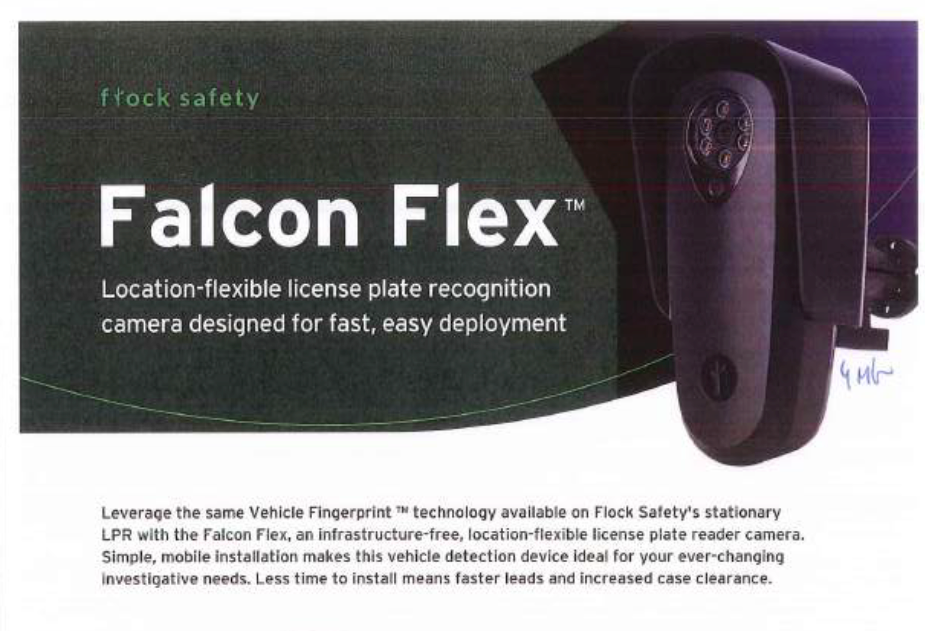
The court records also include Flock marketing materials that detail why commercial property owners should invest in a Flock surveillance system and detail the capabilities of the company’s “Falcon Flex” camera, which can read license plates, bumper stickers, and other details about the vehicles it tracks. These are already online, but serve to show how the cameras are marketed.
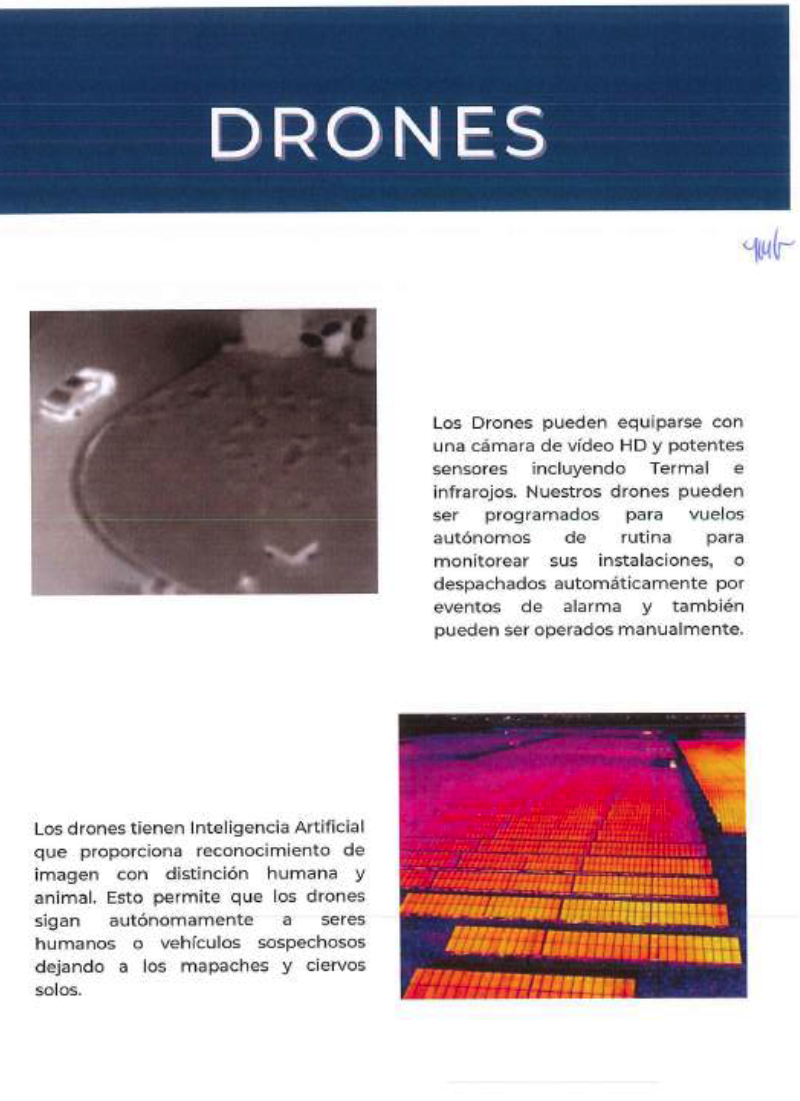
The material submitted by Génesis is incredibly indicative of the company's surveillance capabilities, showing a 24/7 monitoring center, as well as other surveillance technologies. The document also asserts that they provide surveillance powered by artificial intelligence that allows them to "analyze behavior patterns and anticipate possible risks" and real-time monitoring to prevent incidents. The company has 1,200 cameras under the same system, according to the document. The document also explains that the company has a surveillance system that can serve as a substitute to an entry card or biometric entry by analyzing a person's face to confirm their identity. Génesis also markets AI-powered drones that can distinguish between human faces and animals, allowing them to autonomously follow "suspicious" people and vehicles.
The particular brand of the security systems used by Génesis for these services is not immediately clear.
The Flock surveillance ecosystem has garnered widespread negative attention across the United States because they’re a system of mass surveillance that can log every plate that passes by one of its cameras and track that vehicle’s movements throughout different jurisdictions of the country. Both the American Civil Liberties Union and the Electronic Frontier Foundation have rallied against Flock and other ALPR companies because of the impacts of these systems on people’s privacy and possible constitutional violations.
As 404 Media has reported, the cameras can also be used to track people through “FreeForm” searches in certain camera models. All of this negative backlash has led to the company announcing changes to its nationwide camera lookup, like an audit tool that flags “abnormal search behavior” and shortening the data retention policy from 30 days to seven, according to the Associated Press.
Resilient International, Génesis Security, and Flock Safety did not immediately respond to an emailed request for comment sent to their public email addresses. Flock Safety’s auto-response said their press team was out "touching grass."
I will be talking about the documents from Axon and PowerComm, the other company that submitted a proposal to San Lorenzo, at some point in the future. Per Alcalá's newsletter, there are at least 39 municipalities + the Puerto Rico Police in Puerto Rico that have acquired surveillance technology.
This article has been updated with information about Home Depot's contract with Flock Safety for surveillance services.
The documents mentioned throughout the article and more can be found here.
You can also read them below, but you need to click into the newsletter's website to view them. They will not show up in your email. I've redacted some personal information and people's addresses throughout the document.