The Army Tested Their Augmented Reality Goggles in Puerto Rico, and They Failed Spectacularly
The documents I obtained through a FOIA request paint the picture of the type of device that is endemic in the tech space, fun in science-fiction stories but ridiculous and useless in real life.

Ever since the US military began amassing troops and warships in the Caribbean, Puerto Rican media has been perpetually astounded, as if they never considered that the archipelago would ever be used for military purposes after the Navy “left” Vieques in 2003. But that was never really the case. Although we haven’t seen anything like the recent military buildup since the Cold War, the archipelago has remained an important strategic possession and testing ground for the US military for decades.
My previous reporting for this newsletter has touched on how the military has continued to use Puerto Rico as a testing ground over the years. The archipelago was the setting of the "largest counterintelligence training event in the US Army Reserve’s history." Meanwhile, Culebra, once a bombing range, has been used to simulate an “electronically degraded environment.”
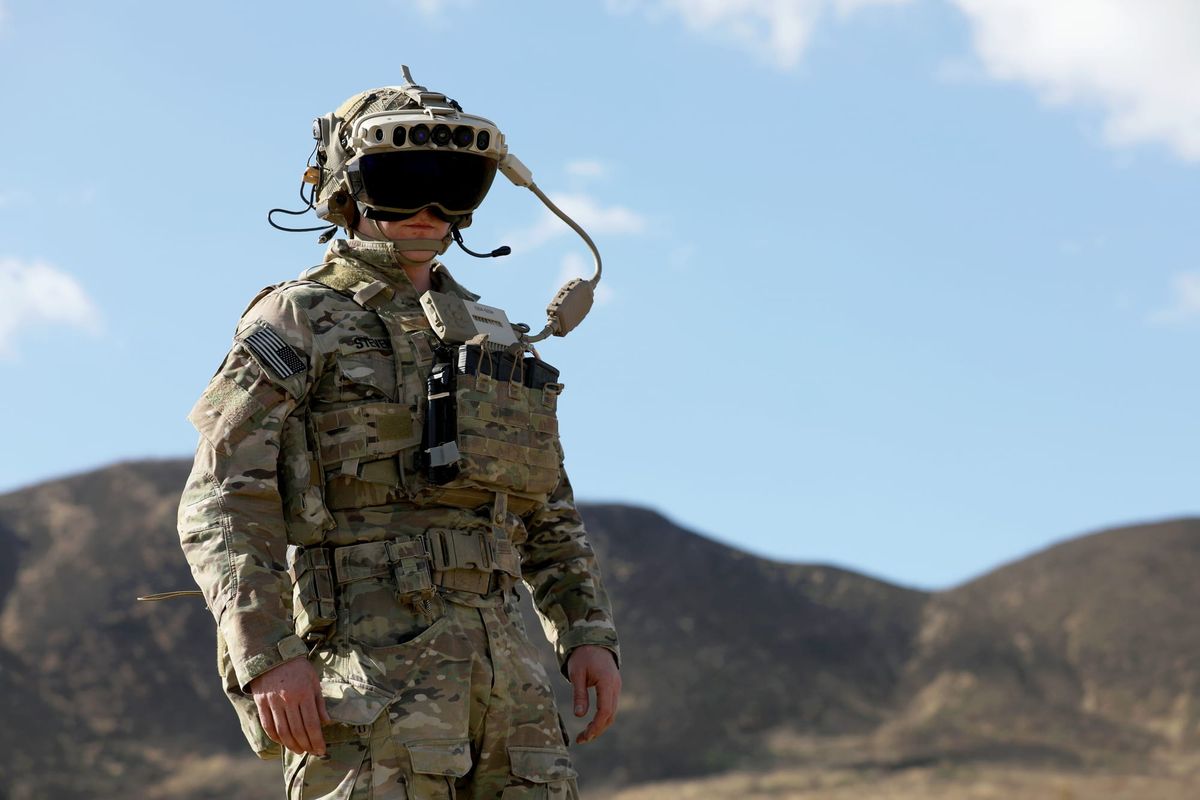
Today, dear reader, I bring you never before seen details about how the Camp Santiago Joint Training Center was used to test the Army's augmented reality (AR) goggles in 2021 and how the test was a spectacular failure. Officially called Integrated Visual Augmentation System (IVAS), the goggles' purpose is to fill a soldier’s vision with a real-life version of the Halo head-up display (HUD). It was once developed by Microsoft until it was switched over to Anduril in 2025, where its anime-obsessed CEO was likely making them match the helmet's in Sword Art Online, his favourite anime.
How IVAS is supposed to work. Source: Washington Post
Once termed one of the Army’s “highest-priority modernization initiatives,” the entire thing was shut down unceremoniously a couple of weeks ago after years of soldiers saying it sucked. Per a Government Accountability Office report, the Army spent over a billion dollars on 10,000 IVAS headsets that “have fallen short of soldiers’ needs and will go into storage, with some potentially used for testing, rather than to the field.”
The documents I obtained through a FOIA request paint the picture of the type of device that is endemic in the tech space: fun in science-fiction stories, but ridiculous and useless in real life.
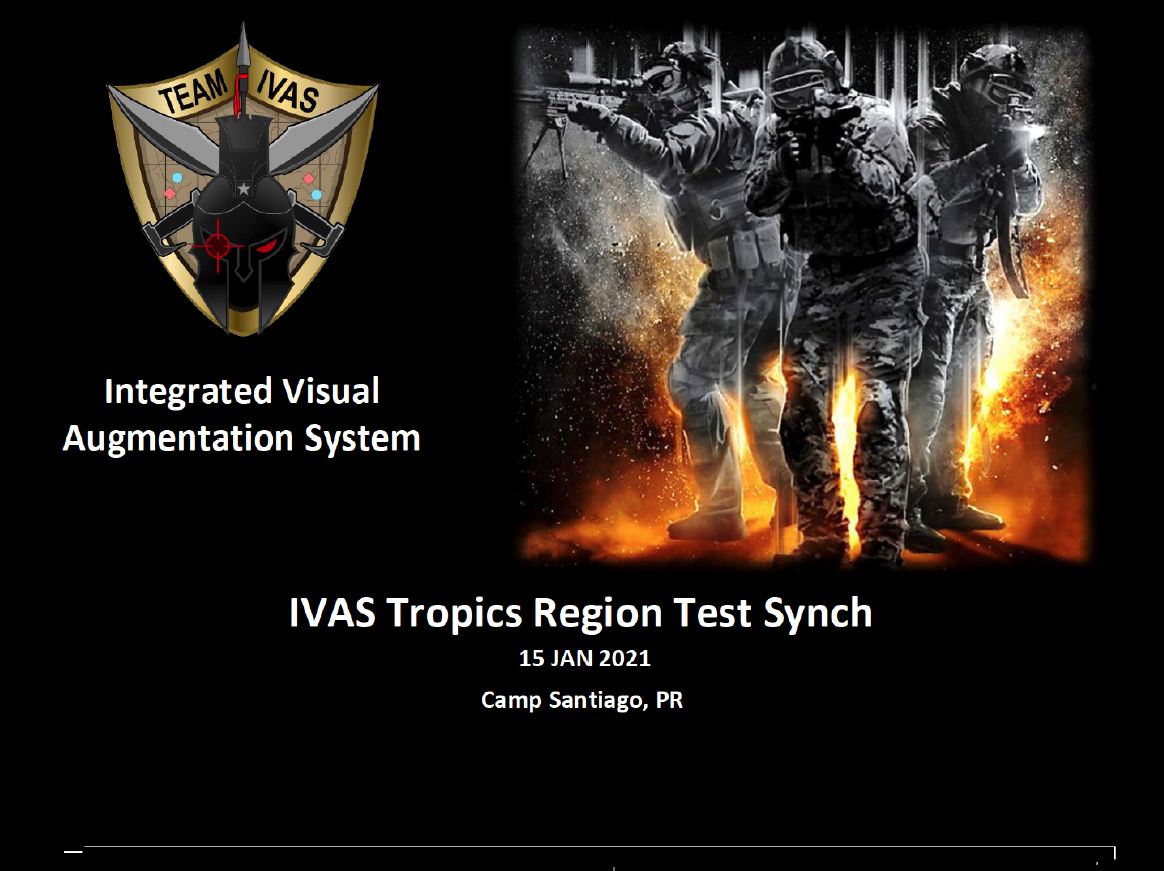
However – before I get into it – I want to note that the cover slide of the PowerPoint for the IVAS test in Puerto Rico is a banger for the type of guy whose closet consists exclusively of Grunt Style shirts and 5.11 pants.