Raw Sewage Spilled into Puerto Rico's Water Because Water Utility Misled Contractor, Lawsuit Alleges
The contractor alleges that PRASA misled them about permits and environmental assesments.


Puerto Rico has been going through a water crisis for months. Broken water infrastructure has led to water rationing or water cuts throughout the archipelago. On top of all of this, the archipelago is going through a drought that has necessitated the Governor declare a national emergency. The Puerto Rico Aqueducts and Sewer Authority (PRASA) has started warning municipalities they face rationing by August.
Amid all of these problems, a new federal lawsuit filed by one of PRASA’s sewer repair contractors alleges that misrepresentations from the public water utility about a court order and permits led to raw sewage spilling into navigable waters in Puerto Rico.
Between 2021 and 2023, Longo En Tech of Puerto Rico was awarded six federally funded sewer infrastructure contracts by PRASA, per the lawsuit. Worth more than $115, these projects were tied to at least one of the consent decrees[[1]] that arose from PRASA violating the Clean Water Act. The consent decree, a court-approved agreement, was meant to force PRASA to fix the archipelago’s water and sewer infrastructure that harmed people’s health.
Per the lawsuit, a key part of this consent decree, which has been amended and superseded over the years, is that PRASA needs to share them with contractors and that certain engineering assessments be completed for projects tied to it. However, Longo’s lawsuit alleges that PRASA never shared the consent decree with them, which led to “incidental violations” of said decree and “substantial negative impact” on the projects.
“PRASA and Arcadis repeatedly ignored written requests from Longo to clarify the applicability of federal consent decrees to the projects. PRASA and Arcadis issued an improper Certification that the Consent Decrees did not apply to the Six Federal Projects,” the complaint alleges.
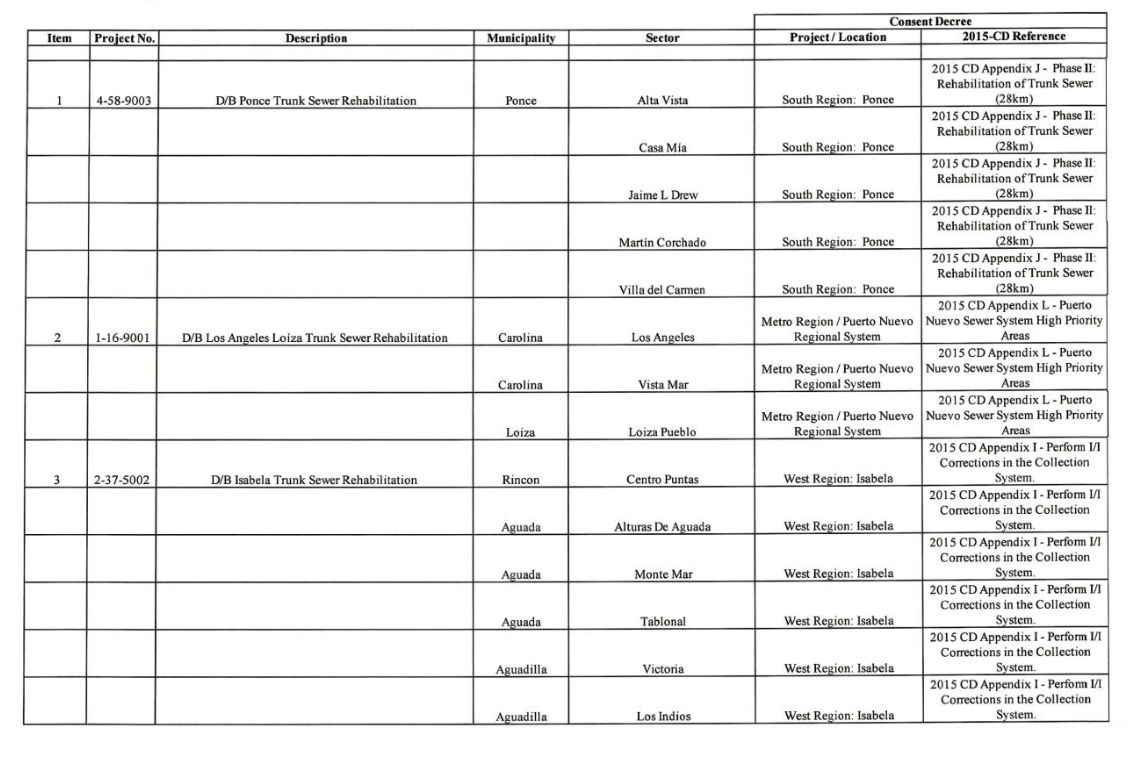
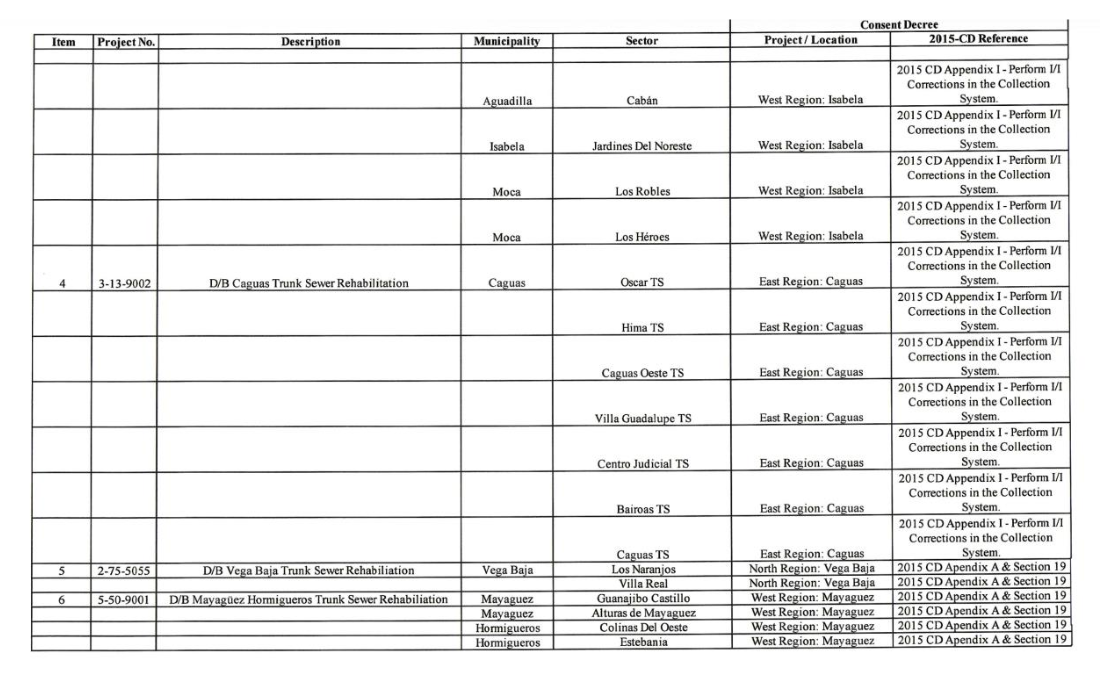
PRASA and a design firm that acted as project representative, Arcadis Caribe, allegedly misrepresented the conditions of the sewer systems and failed to obtain permits from the US Army of Engineers or alert them to their applicability, according to the lawsuit. The complaint alleges a similar thing happened with FEMA-required permits. Arcadis, also a defendant in the lawsuit, allegedly developed incorrect and incomplete design parameters that ignored federal wetlands, which created risk of raw sewage spills into Puerto Rico's waters. The lawsuit alleges raw sewage spilled into the water, which would be a Clean Water Act violation. Per the lawsuit, Longo is meant to "steer clear and correct spillage" or be liable for the spill under federal law.
After suffering delays and extra costs going into the millions, Longo was eventually taken off all but one of the six projects, the lawsuit alleges.
"Rather than correcting the mentioned course of action and taking remedial actions consistent with the duty of a responsible public company operating an island-wide raw sewage system, PRASA and Arcadis issued termination letters to Longo on all projects except the one in Isabela, Puerto Rico," reads the lawsuit.
In a written statement, PRASA Executive President Luis Reinaldo González acknowledged the lawsuit and said he would not make public comments about the allegations because of the pending lawsuit. The statement also says that PRASA remains committed to developing infrastructure laws while following applicable laws and regulations. You can find his full statement (in Spanish) here.
Neither Longo’s lawyers nor Arcadis Caribe responded to emailed requests for comment. The EPA, whose lawsuits led to the consent decree with PRASA, acknowledged a request for comment but was unable to respond by press time.
The federal complaint can be found here.
[[1]]: A consent decree is a legally-binding court-approved agreement between the two parties in a lawsuit without any admission of guilt or liability. Compliance is supposed to be policed by the courts. There have been multiple consent decrees and modifications between PRASA and the EPA to resolve alleged Clean Water Act violations over the years. The most recent one was in 2016 with a first modification in 2024.